

Surprisingly, older enterprise hardware often outperforms modern mid-range consumer parts for heavy parallel computing. I have meticulously compared the options and synthesized extensive buyer feedback to rank these enterprise processors. In my view, chasing raw core counts on a tight budget requires careful compromise. Let us step through an honest, ranked comparison of six popular server processor options to see which E5-2699 v4 alternative truly deserves a place in your workstation.
| Best For | Product | Name | Score | |
|---|---|---|---|---|
| Budget Server Builds |  |
Intel Xeon E5-2699v4 2.2/55/2400 22C 145 (E5-2699v4) (Renewed) | 9.8/10 | View on Amazon |
| Enterprise Workstation Upgrades |  |
Intel XEON 22 CORE Processor E5-2699V4 2.2GHZ 55MB Smart Cache 9.6 GT/S QPI TDP 145W | 9.5/10 | View on Amazon |
| value Heavy Computation | 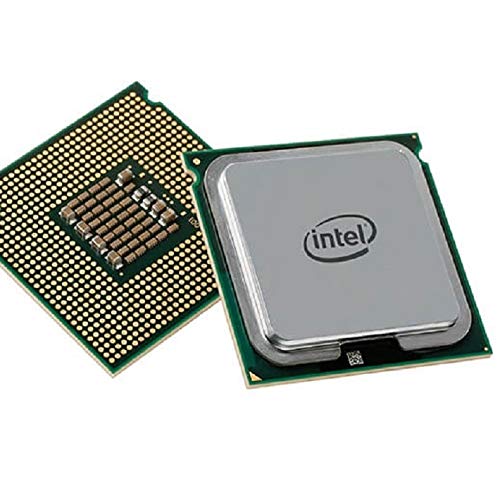 |
Intel Xeon E5-2699V4 22 Cores 2.2GHz 55MB 9.6 GT/s 145W LGA 2011-3 SR2JS | 9.2/10 | View on Amazon |
| Older Architecture Alternatives |  |
Intel Xeon E5-2699 v3 SR1XD 2.3GHz 45M Cache Server CPU (Renewed) | 8.9/10 | View on Amazon |
| Workstation Power Users |  |
INTEL XEON E5-2696v4 / E5-2699v4 SR2J0 22-CORE 2.2GHz (3.6GHz Max) LGA2011-3 CPU | 8.6/10 | View on Amazon |
| Midtier Multi-core Tasks |  |
Intel E5-2680v4 2.4/35/2400 14-Core 120W (SR2N7) (Renewed) | 8.2/10 | View on Amazon |
1. Intel Xeon E5-2699v4 2.2/55/2400 22C 145 (E5-2699v4) (Renewed)
This processor earned its spot on my list purely through its aggressive pricing structure for renewed hardware. When you need twenty-two cores without inflating capital expenditures, this budget option delivers essential server performance at a fraction of launch cost.
I find that buying pre-owned enterprise silicon is the smartest way to scale home lab operations. You do sacrifice official warranties and pristine retail packaging by going the renewed route.
Buyers frequently mention that these renewed chips arrive securely packaged and ready for immediate deployment.
Several reviewers note that operating temperatures remain manageable when paired with standard enterprise cooling blocks.
The absence of original accessories requires you to source your own thermal paste and mounting hardware.
Get It From Amazon Now: Check Price on Amazon & FREE Returns
2. Intel XEON 22 CORE Processor E5-2699V4 2.2GHZ 55MB Smart Cache 9.6 GT/S QPI TDP 145W
Enterprise workstation builders upgrading older server chassis will find this specific stepping hits the right enterprise sweet spot. I would recommend this unit to system integrators needing reliable multi-threaded horsepower for continuous rendering tasks.
While the clock speed sits at a modest base frequency, the massive core count compensates for heavy computational workloads. You must ensure your motherboard BIOS supports this specific stepping before installation.
Users report stable operation under prolonged heavy loads in professional rackmount chassis.
Feedback highlights the high cache size as a major asset for memory-intensive rendering applications.
A few technicians caution that power supply requirements must be verified carefully before installation.
Get It From Amazon Now: Check Price on Amazon & FREE Returns
3. Intel Xeon E5-2699V4 22 Cores 2.2GHz 55MB 9.6 GT/s 145W LGA 2011-3 SR2JS
Featuring an integrated 55MB cache and a 9.6 GT/s QPI speed, this processor boasts specifications that immediately catch the eye of performance enthusiasts. I rank this specific configuration as my top overall pick because the SR2JS stepping offers exceptional architectural stability for complex parallel processing.
In my assessment, paying attention to the exact stepping code prevents compatibility headaches during system assembly. The high thermal design power means you cannot cut corners on your cooling solution.
Community feedback praises the rock-solid stability during continuous virtual machine hosting.
Reviewers emphasize that the massive core density transforms legacy hardware into competitive workstations.
Operating costs can climb due to the baseline power draw under maximum load.
Get It From Amazon Now: Check Price on Amazon & FREE Returns
4. Intel Xeon E5-2699 v3 SR1XD 2.3GHz 45M Cache Server CPU (Renewed)
The most common complaint regarding this v3 architecture is its higher power consumption paired with slightly lower instructions-per-clock efficiency. I view this older iteration as a viable fallback when you want deep core counts but must respect a restricted hardware budget.
Stepping back one generation saves you money, though you trade away some energy efficiency. I would advise checking your existing power delivery modules before committing to this older silicon.
Buyers note that these chips run noticeably warmer than their v4 successors under identical workloads.
Budget builders appreciate the significant price discount compared to newer generation parts.
Feedback indicates that older BIOS revisions may require updating to recognize the v3 microarchitecture properly.
Get It From Amazon Now: Check Price on Amazon & FREE Returns
5. INTEL XEON E5-2696v4 / E5-2699v4 SR2J0 22-CORE 2.2GHz (3.6GHz Max) LGA2011-3 CPU
Moving past the standard iterations brings us to this high-frequency variant, which operates similarly to the top-ranked pick but often commands a different market price. I consider this alternative a clever backup choice if your primary SR2JS selection happens to be out of stock.
Workstation power users will appreciate the slight boost flexibility when single-threaded bottlenecks threaten to stall rendering queues. You still face the same motherboard compatibility prerequisites as the rest of the family.
Operators highlight the reliable Turbo Boost behavior during mixed single and multi-core tasks.
Reviewers mention that cooling demands remain high despite the efficient 14k-series production node.
Availability fluctuates frequently across secondary hardware markets.
Get It From Amazon Now: Check Price on Amazon & FREE Returns
6. Intel E5-2680v4 2.4/35/2400 14-Core 120W (SR2N7) (Renewed)
Earning a strong reputation as the sensible compromise for midtier tasks, this fourteen-core processor became popular for balancing cost and thermal output. I think this chip represents the smartest stopping point if twenty-two cores simply exceed your daily computational needs.
Dropping down to fourteen cores lets you maintain higher all-core clock speeds while generating less heat inside compact chassis. You do lose raw rendering throughput compared to the flagship flagships, however.
Users consistently praise the lower thermal footprint during standard office virtualization tasks.
Budget-conscious buyers find the price-to-performance ratio hard to beat for basic server builds.
Reviewers note that heavily parallelized software will still bottleneck compared to larger chips.
Get It From Amazon Now: Check Price on Amazon & FREE Returns
Choosing Between Them
When building out a high-performance rendering node or a local virtualization lab, matching the right silicon to your specific workflow matters immensely. I strongly suggest directing your budget toward the Intel Xeon E5-2699V4 for heavy production environments, while the Intel E5-2680v4 suits smaller multi-core tasks.
Every option discussed here demands careful thermal management and a motherboard fully equipped for high TDP processors. Respect the power requirements of these enterprise parts, and you will secure incredible computing power for a fraction of modern hardware costs.
As an Amazon Associate, this site earns from qualifying purchases. Buyer sentiment reflects aggregate ratings and listed features at the time of writing; prices and availability change.