


Cheap plastic fasteners often fail under the weight of thick insulation, whereas premium steel washers provide the structural integrity required for a permanent seal. I have synthesized buyer sentiment and technical specs to rank these five options. My analysis shows that choosing the right hardware is the difference between a tidy installation and one that sags over time. Let us look at how these stack up in an honest, ranked comparison.
1. QWORK Foam Board Fasteners Washers, 500 PCS 1-1/8" Steel Washers for Fixing Insulation Board Foam Board

These washers earned the top spot because their steel construction offers superior bite and load distribution. They provide the most reliable grip for heavy-duty insulation projects where you cannot afford any slippage.
In my view, the 1-1/8 inch diameter is the sweet spot for balancing surface area with ease of use. I prefer this design because it stays flat against the foam, creating a crisp and secure finish.
Buyers frequently praise the high count of 500 pieces for large projects.
The steel finish resists bending even when driven into dense substrates.
This is the most popular choice for professionals managing large-scale building insulation.
Get It From Amazon Now: Check Price on Amazon & FREE Returns
2. 100 Pcs 1.77 Inch Plastic Washers – 45mm Polypropylene Foam Board Fasteners, Insulation Washers for Fixing and Fastening Rigid Foam and Load Spreading

This product is designed specifically for contractors who need to fasten rigid foam panels without risk of cold bridging or metal corrosion. The larger diameter spreads pressure across a wider surface, preventing the fastener from pulling through soft foam.
I find these useful for exterior applications where moisture might cause steel to oxidize over time. They are an excellent choice if you need to protect the structural integrity of the foam board itself.
Users appreciate the wider footprint for delicate or brittle insulation materials.
The polypropylene material is highly resistant to environmental degradation.
This is a top-tier choice for projects requiring non-conductive fastening solutions.
Get It From Amazon Now: Check Price on Amazon & FREE Returns
3. 200 Pcs Foam Board Fasteners Kit Washers for Insulation Foam Board Panels 100Pcs 1-1/8 Inch Galvanized Steel Washer and 100Pcs Screws for Fixing Fastening and Supporting Hardware Set for Foam Board
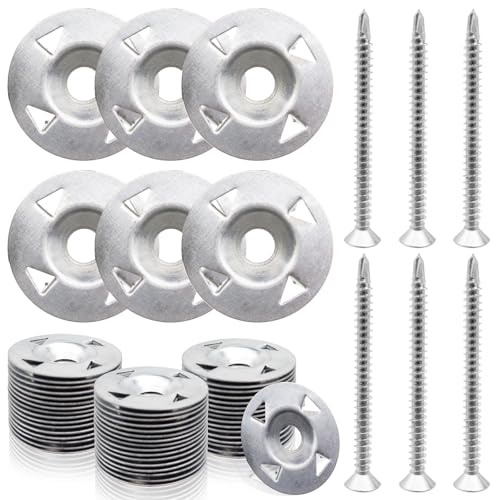
An unexpected feature of this set is the inclusion of matching screws, which saves you a separate trip to the hardware store. It acts as an all-in-one solution that ensures your washer and fastener are perfectly compatible from the start.
I appreciate that this kit removes the guesswork of pairing hardware sizes. It is a solid pick if you want to ensure your galvanized steel components match precisely for a consistent installation.
Reviewers highlight the convenience of having both components in one box.
The galvanized coating is effective at preventing premature rust.
This is the best option for users who want to avoid sourcing separate hardware.
Get It From Amazon Now: Check Price on Amazon & FREE Returns
4. 600Pcs Foam Board Fasteners – 1-1/8 Inch Metal Washers for Fixing Installation

The most common buyer complaint with this set is the lack of included mounting hardware, which can catch new users off guard. However, when you consider the high volume of 600 pieces, it remains a cost-effective solution for massive insulation jobs.
I think the value here lies in the bulk quantity rather than the presentation. If you already have your own screws or nails, this pack offers a functional, no-frills approach to large scale installation.
The high piece count is ideal for budget-conscious large projects.
Some users note that the metal edges can be sharp during rapid handling.
This is the most efficient choice for users who already own their fastening hardware.
Get It From Amazon Now: Check Price on Amazon & FREE Returns
5. 500Pcs Foam Board Fasteners Washers, 1-1/8 Inch Metal Washers | For Installation Foam Board Panels, Insulation Foam Board Fixing Fastening Hardware, With Cut Resistant Gloves

Compared to the 600-piece pack mentioned previously, this set prioritizes user safety by including cut resistant gloves. While the total count is slightly lower, the added protection makes handling sharp metal edges much more comfortable.
I believe this is a thoughtful inclusion for anyone who has ever sliced their hands on thin stamped metal. It is a sensible choice for DIYers who want to finish the job without minor injuries.
The included gloves are a standout addition for safety-conscious users.
Consistent quality across the 500-piece batch ensures a uniform look.
This set is highly recommended for those who prioritize hand protection during assembly.
Get It From Amazon Now: Check Price on Amazon & FREE Returns
Choosing Between Them
My top recommendation is the QWORK Steel Foam Board Washers, as their steel construction provides the most reliable grip for high volume projects. For those working with rigid foam panels, the Polypropylene Washers are an excellent alternative, while the Complete Hardware Kit is best for buyers who want an all-in-one solution. The 600-piece set is perfect for large scale installation on a budget, and the safety-focused kit is the best choice for those who want extra protection.
Regardless of the kit you choose, remember that none of these packages include the actual power tools or drill bits necessary for the job. You will need to source your own compatible fasteners and driving equipment to complete your installation effectively.
What to Look For
Material Compatibility
You must match the fastener material to your specific insulation type. Plastic washers are essential for rigid foam because metal fasteners often cut through the board like a hot wire through butter. Choose polypropylene or nylon disks if you want to avoid thermal bridging. These materials act as a heat barrier, ensuring your insulation keeps working as intended without conducting cold into your home.
Fastener Length
Your fastener length needs to account for the total thickness of your foam board plus the penetration depth required for the substrate. A good rule of thumb is to add at least one inch to the insulation thickness to ensure a firm grip. If your screw is too short, the board will pull away from the wall. If it is too long, you risk damaging wiring or pipes hidden behind the exterior sheathing.
Washer Diameter
The size of the washer surface area determines how well the fastener holds the foam in place. A larger diameter washer distributes the clamping pressure over a wider area, which prevents the fastener from pulling through the soft foam surface. Standard sizes usually range from two to three inches. Use the larger diameter for softer foam types to ensure the board stays snug against the wall during high winds.
Substrate Requirements
Check whether your fasteners are designed for wood studs, metal framing, or masonry. Using the wrong screw thread will result in a weak connection that fails under vibration or thermal expansion. Look for fasteners with coarse threads if you are working with wood. If you are mounting to concrete or block, you will need masonry-specific anchors to maintain a secure hold.
Corrosion Resistance
Because these fasteners often sit behind siding or near moisture-prone areas, rust is your primary enemy. Always prioritize galvanized or stainless steel screws to prevent degradation over time. Cheap, uncoated screws will leave ugly rust streaks down your exterior walls within a few seasons. Investing in corrosion-resistant coatings now saves you from expensive repairs later.
Installation Method
Think about how you plan to drive the fasteners into place. Most systems use a standard drill with a specific driver bit, but some high-volume projects benefit from pneumatic or specialized tools. Ensure your chosen fastener system allows for quick installation without stripping the screw head. A fastener that snaps or strips easily will turn a simple afternoon project into a frustrating struggle.
Frequently Asked Questions
Can I use standard screws for foam board insulation?
You should avoid using standard screws because they lack the wide surface area needed to grip soft insulation. Without a specialized plastic washer or plate, a regular screw head will simply tear through the board like a knife through butter. Always pair your fasteners with insulation washers to distribute pressure. This prevents the board from sagging or pulling away from the wall over time.
How many fasteners do I need per sheet of foam?
Most manufacturers recommend placing one fastener every 12 to 16 inches along the edges and across the middle of the board. Using too few anchors leaves the insulation vulnerable to air gaps, which defeats the purpose of your thermal barrier. Aim for roughly 6 to 8 fasteners for a standard 4×8 foot sheet. If you live in an area with high wind or extreme weather, add a few extra to ensure the panels stay rigid.
Do I need to seal the holes made by the fasteners?
Every hole you punch through the foam is a potential path for moisture and air leakage. You should apply a small dab of construction adhesive or specialized acoustic sealant over the fastener head once it is set. This simple step acts as a final seal against drafts. It keeps your insulation envelope airtight and working at peak efficiency.
Should I use plastic or metal fasteners?
Plastic fasteners are generally the better choice because they act as a thermal break. Metal conducts temperature, meaning a metal screw can create a tiny bridge that allows heat to escape or cold to seep in. If you must use metal for structural reasons, choose a style with a plastic cap or cover. This prevents the metal head from becoming a conduit for unwanted heat transfer.
How long should the fastener be for my foam thickness?
Your fastener needs to be long enough to penetrate the foam plus at least one inch into the underlying stud or substrate. Using a fastener that is too short will result in a weak connection that fails under the slightest pressure. If you are layering multiple sheets, calculate the total thickness of the foam before buying your hardware. Always round up to the next available size to ensure you reach solid wood.
As an Amazon Associate, this site earns from qualifying purchases. Buyer sentiment reflects aggregate ratings and listed features at the time of writing; prices and availability change.