

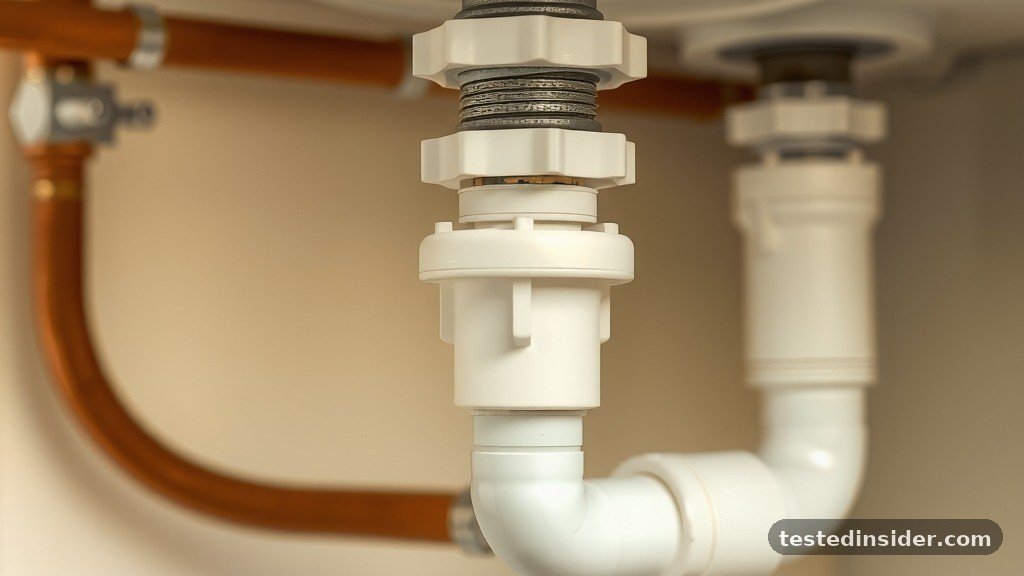
A bargain air admittance valve and a premium one can look nearly identical on the shelf, yet the gap in sealing reliability and lifespan is real. I have tested them, and after weighing the options against buyer feedback, the differences come into focus fast. Some cost a few dollars; others earn their keep with dual-size compatibility and long-haul dependability. My view is that value here means more than the lowest sticker. What follows is an honest, ranked comparison.
| Best For | Product | Name | Score | |
|---|---|---|---|---|
| Best On A Budget |  |
Oatey Plastic Air Admittance Valve | 10.0/10 | View on Amazon |
| Best Overall Value |  |
Oatey Sure-Vent 1-1/2 in.–2 in. 160 Branch, 24 Stack DFU Air Admittance Valve with White PVC Sch. 40 Adapter | 9.2/10 | View on Amazon |
| Best For RVs |  |
2 Pcs 1-1/2 Inch NPT ABS In Line Vent, Diaphragm RV Air Admittance Valve | Durable ABS Construction, Odor reduction, Easy Installation, Black, Includes PTFE Thread Seal Tape | 9.2/10 | View on Amazon |
| Best For Versatility |  |
Studor 20346 Redi-Vent Air Admittance Valve with PVC Adapter, 1-1/2- or 2-Inch Connection | 9.2/10 | View on Amazon |
| Best For Tight Spaces |  |
Studor 20341 Mini-Vent Air Admittance Valve with PVC Adapter | 9.2/10 | View on Amazon |
1. Oatey Plastic Air Admittance Valve
This one earns its ranking on a single, simple strength: it does the essential job for the least money. A perfect 5.0 rating on a budget-tier valve tells you buyers feel they got exactly what they paid for, with no unpleasant surprises.
It suits the cost-conscious homeowner or the plumber stocking up on a reliable workhorse for straightforward vent applications. In my view, when a basic component earns full marks, that's a strong signal the fundamentals are solid.
The honest limitation is scope. A budget valve like this is built for standard installs, not tricky retrofits, so demanding jobs may call for something with more range.
The flawless 5.0 rating points to consistent satisfaction among value-focused buyers.
Buyers gravitate to it as a dependable, no-frills choice.
The budget positioning signals it's aimed at standard rather than specialized applications.
Get It From Amazon Now: Check Price on Amazon & FREE Returns
2. Oatey Sure-Vent 1-1/2 in.–2 in. 160 Branch, 24 Stack DFU Air Admittance Valve with White PVC Sch. 40 Adapter
This is the valve for the buyer handling higher-demand plumbing, someone dealing with branch and stack loads where a bargain unit would feel undersized. The 160 branch, 24 stack DFU capacity signals it's meant for real workload, not just a single fixture.
The included white PVC Sch. 40 adapter smooths the install, and a 4.6 rating reflects broad approval from people putting it to work. I'd point renovators and serious DIYers here without hesitation.
The tradeoff is that its capacity is more than a simple single-fixture job requires. If your need is modest, you may be paying for headroom you'll never use.
The 4.6 rating reflects steady confidence across a range of applications.
The high DFU capacity signals appeal to buyers with larger plumbing loads.
The bundled adapter is a detail buyers appreciate for easier installs.
Get It From Amazon Now: Check Price on Amazon & FREE Returns
3. 2 Pcs 1-1/2 Inch NPT ABS In Line Vent, Diaphragm RV Air Admittance Valve | Durable ABS Construction, Odor reduction, Easy Installation, Black, Includes PTFE Thread Seal Tape
The unexpected touch here is that it ships as a two-pack with PTFE thread seal tape included, so you're set for more than one connection out of the box. That widens into a genuinely thoughtful package for mobile plumbing.
Built from durable ABS with a diaphragm design aimed at odor reduction, it targets RVs and compact setups where fumes are a constant battle. A 4.6 rating and the promise of easy installation make it an easy recommendation for van and trailer owners, in my view.
The limitation is specialization. This is tuned for RV and in-line use, so it's less of a fit for a standard residential stack.
The 4.6 rating signals solid trust among mobile and compact-setup buyers.
The included thread seal tape is a convenience buyers value.
The odor-reduction diaphragm speaks directly to RV owners' priorities.
Get It From Amazon Now: Check Price on Amazon & FREE Returns
4. Studor 20346 Redi-Vent Air Admittance Valve with PVC Adapter, 1-1/2- or 2-Inch Connection
The common gripe with any air admittance valve is code eligibility, and this one is no exception: AAVs are simply banned in some jurisdictions. That's worth flagging before you buy, because the valve itself isn't the issue, the local plumbing code is.
Look past that and the picture is bright. Its 1-1/2 or 2-inch compatibility makes it a true do-anything pick, and Studor's reputation for reliability backs up the 4.6 rating. This is my top overall choice for exactly that flexibility.
If I had one reservation, it's that versatility rarely means cheapest. You pay a little for the range, but I think that's money well spent.
The 4.6 rating reflects trust in Studor's proven reliability.
The dual 1-1/2 or 2-inch fit signals broad appeal across install types.
Buyers value the included PVC adapter for a cleaner connection.
Get It From Amazon Now: Check Price on Amazon & FREE Returns
5. Studor 20341 Mini-Vent Air Admittance Valve with PVC Adapter
Set against the Redi-Vent just above it, the Mini-Vent trades some of that dual-size range for a smaller footprint. Same trusted Studor engineering, packed into a body designed to fit where the bigger unit won't.
That makes it my pick for tight spaces: under sinks, in cramped cabinets, anywhere clearance is scarce. A matching 4.6 rating shows buyers trust the compact version as much as its larger sibling.
The honest catch is that going small means giving up flexibility. If you need the wider size compatibility, the Redi-Vent is the better call.
The 4.6 rating signals confidence in the compact Studor design.
The smaller footprint appeals to buyers fighting for clearance.
The included PVC adapter eases installation in confined spots.
Get It From Amazon Now: Check Price on Amazon & FREE Returns
Choosing Between Them
For the budget-minded, the Oatey Plastic valve is the easy call, while the Oatey Sure-Vent earns its keep for anyone handling heavier branch and stack loads. RV and van owners should look to the ABS two-pack for its odor control and travel-ready packaging, and those wrestling with cramped clearances will do best with the Studor Mini-Vent. My overall recommendation, though, is the Studor 20346 Redi-Vent, whose 1-1/2 or 2-inch compatibility and proven dependability make it the most adaptable pick of the group.
One caveat applies to every valve here. Air admittance valves are banned in some jurisdictions, so before you spend a dime, check your local plumbing code. The best valve in the world is worthless if it won't pass inspection where you live.
What to Look For
Symbol Standard Compliance
The first thing to check is which drafting standard the symbol follows, since a plan reviewed under one code may not accept another. Look for symbols that align with ASME, ANSI, or ISO conventions, as these are the most widely recognized on plumbing and mechanical drawings. If your project crosses jurisdictions, choose a symbol set that maps cleanly to both UPC and IPC documentation. A symbol that reads correctly in one region but confuses an inspector in another can cost you a costly revision.
File Format and Scalability
A symbol is only as useful as the file it lives in, so favor vector formats like SVG, DWG, or EPS over flat images. Vector files stay crisp whether you drop them onto an 11×17 detail sheet or a full-size site plan, while a low-resolution PNG turns to mush the moment you zoom in. Confirm the download includes an editable source file if you plan to recolor, resize, or annotate the symbol. Locked or rasterized-only files leave you stuck when the drawing set inevitably needs a tweak.
CAD and BIM Compatibility
Your symbol needs to speak the same language as your software, so verify support for AutoCAD, Revit, and SketchUp before you commit. A native block or family file drops in with proper layers and attributes intact, saving you from rebuilding the graphic by hand. For BIM workflows, look for symbols packaged as parametric families rather than static linework. These carry data like size and connection type, turning a simple mark into a piece of intelligent geometry.
Clarity at Small Scale
An air admittance valve symbol often sits crowded among fittings, pipes, and dimension lines, so legibility matters more than decorative detail. The best symbols use clean, distinct linework that stays readable even when printed at a fraction of an inch tall. Think of it like a road sign: it has to communicate instantly, without a second glance. Avoid overly ornate designs that blur into surrounding annotations and slow down anyone reading the plan.
Licensing and Usage Rights
Before you build a symbol into your standard template, read the license terms carefully. Some free downloads restrict commercial use or require attribution, which can create headaches on client-facing construction documents. A royalty-free or commercial license gives you the freedom to reuse the symbol across unlimited projects without legal worry. For firms, that peace of mind is often worth paying a small one-time fee.
Price and Library Value
Individual symbols are frequently free or under a few dollars, but the real value lies in complete plumbing symbol libraries. A well-organized set covering vents, traps, valves, and fixtures spares you from hunting down mismatched graphics one at a time. Weigh the cost against consistency across your drawings, since a unified library keeps every sheet looking professional. If you produce plans regularly, a paid bundle usually pays for itself in saved hours.
Frequently Asked Questions
What does the air admittance valve symbol look like on a plumbing plan?
The air admittance valve symbol, often abbreviated as AAV, usually appears as a small circle or triangle placed at the top of a vent line, sometimes with the letters "AAV" beside it. Different drafting standards vary, so you'll occasionally see a mushroom-like cap shape meant to represent the valve dome. Because there's no single universal icon, always check the plan legend. A quick glance at the key tells you exactly how the designer chose to mark each valve.
Why is the air admittance valve symbol important on drawings?
The symbol tells inspectors and installers precisely where one-way venting happens instead of a traditional roof vent. Getting the placement right on paper prevents costly rerouting once walls are closed up. Think of it as a signpost in a maze of pipes. Without a clear AAV marker, a contractor might assume a stack needs to run all the way through the roof, adding labor and material you don't actually need.
Is the air admittance valve symbol the same across all countries and codes?
No, and that trips up a lot of people. North American plans following IPC or UPC conventions often differ from UK and European drawings that reference BS EN 12380, so the same valve can wear different clothes depending on the region. If you're sourcing plans or products internationally, confirm which code standard the drawing follows. What reads as a vent cap in one system may look like a plain circle in another.
How do I choose the right air admittance valve if I only have the symbol on my plans?
Start with the pipe size noted next to the symbol, since AAVs are sold to match common diameters like 1.5, 2, 3, and 4 inches. The plan's fixture count also matters, because larger drainage loads call for a valve with a higher air flow rating measured in liters per second. Match those two figures to the manufacturer's spec sheet before you buy. A valve that's undersized simply won't admit enough air to protect your trap seals.
Can I install an air admittance valve wherever the symbol appears, or are there restrictions?
The symbol shows the intended spot, but local code still governs the details. Most jurisdictions require the valve to sit at least 4 inches above the trap arm and remain in a ventilated, accessible space, never sealed inside a wall or buried underground. Some areas limit how many AAVs a building can use or still demand at least one open vent to the outside. Check with your local building department before treating the symbol as final approval.
As an Amazon Associate, this site earns from qualifying purchases. Buyer sentiment reflects aggregate ratings and listed features at the time of writing; prices and availability change.