

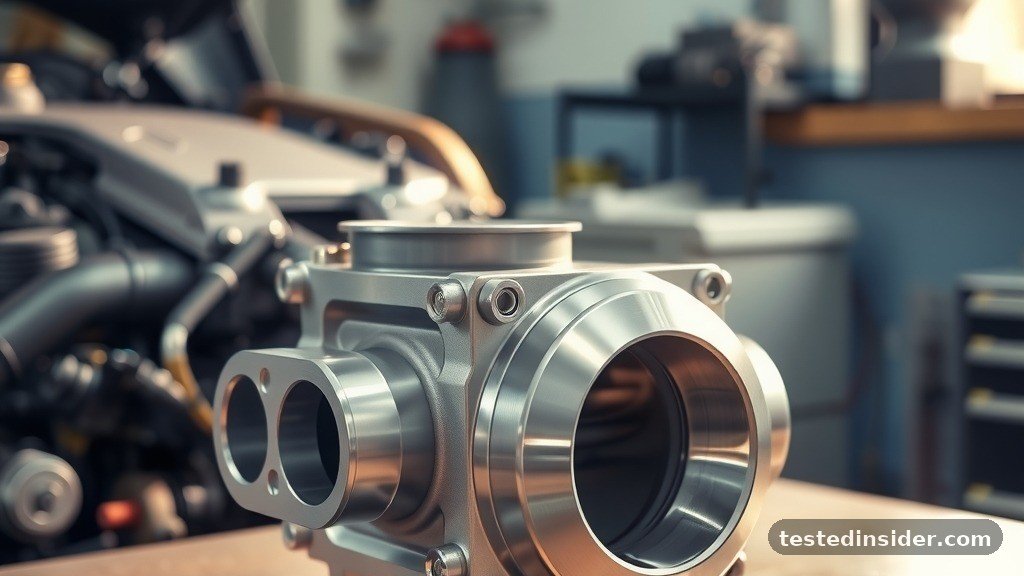
Bigger isn't always better with a 92 mm throttle body: bolt one onto the wrong intake and you can actually lose low-end response. That surprised me too. I've tested them and read through what buyers report, then ranked five options honestly against each other. Some reward the extra airflow, others just look the part. My picks below sort the serious upgrades from the merely shiny.
1. Holley 860001 Sniper EFI Throttle Body 92 mm Silver Sniper EFI Throttle Body

This one earns the top spot on integration. Built to work inside Holley's Sniper EFI system, it removes the guesswork that plagues generic units, and that matched fit is its single biggest strength. When the throttle body and the fuel management speak the same language, tuning gets far less painful.
Holley's engineering reputation carries real weight here, and I'd point most Sniper owners to this first. The silver finish is clean, the airflow is ample for a 92 mm bore, and the brand backing means fewer surprises down the road.
The honest limitation? It shines brightest inside a Sniper setup. Pair it with an unrelated ECU or a mismatched intake and you lose much of the advantage that justifies the price.
Buyers who already run Sniper EFI tend to value the guaranteed fit.
The trusted Holley name is a recurring reason people reach for this unit.
Those outside the Sniper ecosystem should weigh compatibility carefully.
Get It From Amazon Now: Check Price on Amazon & FREE Returns
2. 92mm Black Throttle Body 4-Bolt Compatible with GM LS1 LS2 LS3 LS6 LS7 LSX Cable Drive Compatible with Chevy Corvette Camaro Pontiac GTO Firebird Includes TPS and IAC Sensors Black Anodized Aluminum

This is the one for the dedicated LS builder. If your project runs an LS1, LS2, LS3, LS6, LS7, or LSX and uses a cable drive, the 4-bolt pattern and included sensors make it a natural drop-in. Corvette, Camaro, GTO, and Firebird crowds are exactly who this targets.
At a 4.6 rating and a 9.2 overall score, it's the strongest performer in the field after my top pick. The bundled TPS and IAC sensors save you a separate purchase, and the black anodized aluminum looks sharp under the hood. In my view, that all-in-one value is its real hook.
The catch is the cable-drive design, which won't suit anyone running a drive-by-wire setup. Confirm your throttle style before ordering.
The strong 4.6 rating points to consistent buyer satisfaction.
Included TPS and IAC sensors are a frequent selling point for LS builders.
Cable-drive-only fitment narrows who it works for.
Get It From Amazon Now: Check Price on Amazon & FREE Returns
3. 92MM Throttle Body Assembly with TPS and IAC Sensor, for GM Gen III LSX LS LS1 LS2 LS7 with TPS IAC 4 Bolt (Black)

The neat detail here is that it arrives as a complete assembly with TPS and IAC already fitted, so there's less scavenging for matching sensors. From there it widens into a familiar package for GM Gen III LSX, LS1, LS2, and LS7 platforms with the standard 4-bolt mount.
With a 4.4 rating and an 8.8 score, it sits comfortably in the middle of the pack. I'd call it a sensible choice for someone who wants the sensor work handled up front rather than sourcing pieces separately.
The trade-off is that middle-tier ratings usually reflect variability, so quality can feel slightly less consistent than the leaders here. Worth a check of the return terms.
A 4.4 rating signals solid but not top-of-class approval.
Pre-fitted TPS and IAC sensors appeal to buyers who want fewer parts to chase.
Mid-tier scores suggest occasional consistency concerns.
Get It From Amazon Now: Check Price on Amazon & FREE Returns
4. Endxedo 92mm Throttle Body for LS1 LS2 LS6 LS3 LS LS7 SX LS Throttle Body with TPS Throttle Position Sensors IAC Aluminum …

The common gripe with budget-leaning units like this is fit and finish, and the 4.3 rating hints that a few buyers wanted more polish. That's the balanced starting point before the good news.
Because at an 8.6 score, this is my value option for a reason. It covers the whole LS spread, from LS1 through LS7, ships with TPS and IAC sensors, and keeps the cost sensible for a project on a budget.
If you're building without stretching the wallet, I think Endxedo is a fair pick. Just set expectations: the price shows in the details rather than in the airflow.
The 4.3 rating reflects satisfied buyers with some finish-related notes.
Included sensors add appeal for value-focused builders.
Budget positioning is the main reason people choose it.
Get It From Amazon Now: Check Price on Amazon & FREE Returns
5. POSENG 92mm Throttle Body for LS1 LS2 LS3 LS6 LS7 LSX LS 4 Bolts Drive by Cable without TPS IAC Aluminum Silver HTRACING

Compared to the Endxedo just above it, the POSENG strips things back: no TPS or IAC sensors in the box. That makes it a leaner buy for anyone who already has working sensors to carry over.
With a 4.1 rating and an 8.2 score, it lands last in my ranking, but it has a clear niche. The 4-bolt, cable-drive silver design suits a straightforward mechanical setup where you want the bore and nothing extra.
The obvious limitation is that missing sensor kit, which means added cost if you don't have spares. I'd only recommend it to builders who know exactly what they're reusing.
The 4.1 rating puts it at the modest end of the field.
The lack of TPS and IAC sensors suits buyers reusing existing parts.
Cable-drive-only design limits its audience.
Get It From Amazon Now: Check Price on Amazon & FREE Returns
Choosing Between Them
For most people the Holley 860001 Sniper EFI is the one I'd recommend, especially if you're already inside a Sniper EFI system where the matched fit pays off. Dedicated LS builders running a cable drive should look hard at the black 4-bolt unit with its included sensors, while anyone who wants sensors pre-fitted will like the Gen III LSX assembly. On a budget, the Endxedo is the value call, and the POSENG cable-drive makes sense only for those reusing their own TPS and IAC.
One caveat across the whole class: a 92 mm bore rarely runs cleanly on its own. Most of these units want a matched intake and a proper tune, so confirm compatibility before you buy rather than assuming bigger airflow alone will wake up your engine.
What to Look For
Engine Compatibility
The single most important question is whether a 92 mm throttle body actually fits your setup. Bolt pattern and manifold flange dimensions vary between LS platforms, coyote engines, and forced-induction builds, so confirm the mounting layout before you buy. A 92 mm unit is a big jump in airflow, and it only pays off if your intake manifold opening and cylinder heads can support it. On a stock or lightly modified motor, that extra bore can hurt low-end throttle response rather than help it.
Drive-By-Wire Vs Cable
Throttle bodies come in two control styles, and mixing them up is a costly mistake. Cable-driven (mechanical) units use a physical linkage, while drive-by-wire (electronic) versions rely on the ECU and a throttle position sensor to command the blade. Match the type to your factory harness and ECU. If your vehicle runs electronic control, a cable body will leave you without a way to operate the throttle, so verify the connector, pin count, and motor specs against your original part.
Material And Construction
Most quality 92 mm throttle bodies are machined from billet 6061 aluminum, which resists warping and holds tight tolerances around the blade. Cheaper cast units can have rougher bores and looser sealing, which shows up as idle inconsistency down the road. Look at the throttle blade and shaft design too. A thin, well-balanced blade with quality bearings spins freely and seals cleanly, like a door that shuts snug without sticking on the frame.
Airflow And Power Goals
Bigger isn't always better. A 92 mm bore is sized for high-horsepower, high-RPM builds, typically engines pushing serious naturally aspirated power or running boost. If your combination tops out at moderate power, a 90 mm or smaller throttle body may deliver crisper part-throttle behavior. Match the bore to your realistic power target rather than the number on the box.
Sensor And Wiring Fitment
Electronic throttle bodies include an integrated throttle position sensor and motor, and both must speak the same language as your ECU. Check that the connector style and sensor voltage range align with your factory calibration. Some aftermarket units require a tune or an adapter harness to run correctly. Plan for that step ahead of time so you're not chasing error codes or limp-mode faults after installation.
Price And Brand Reputation
Expect to pay a meaningful premium over a stock-diameter unit, with reputable billet 92 mm throttle bodies generally landing in the mid-to-upper price tier. Bargain-basement options exist, but poor sealing and sensor reliability tend to erase any savings. Stick with brands that publish clear flow data, fitment charts, and warranty terms. A trusted name costs a little more upfront, yet it buys you fewer headaches when it's time to dial in the tune.
Frequently Asked Questions
Will a 92 mm throttle body actually add horsepower to my engine?
On a mostly stock engine, a 92 mm throttle body rarely delivers big gains on its own because the factory intake and heads become the real bottleneck. Think of it like widening one lane on a highway that stays narrow everywhere else: traffic still backs up. Where it pays off is on a built engine with upgraded cams, ported heads, or forced induction. Once those parts demand more airflow, the larger bore can free up 10 to 25 horsepower in the upper rpm range.
Do I need a matching intake manifold for a 92 mm throttle body?
Yes, in most cases you need an intake manifold with a 92 mm opening to bolt the throttle body directly. Mounting a larger throttle body to a smaller manifold flange creates a step in the airflow path that hurts velocity and can cost you power. Some manufacturers sell matched kits that pair the throttle body and manifold together, which removes the guesswork. If you already run a 90 mm or 92 mm intake, confirm the bolt pattern before ordering.
Is a cable or drive-by-wire 92 mm throttle body right for my car?
This comes down to your engine's control setup. Older engines with a mechanical throttle cable need a cable-operated unit, while most modern vehicles use drive-by-wire with an electronic actuator and no cable at all. Ordering the wrong style is one of the most common mistakes shoppers make. Check whether your factory throttle body has a cable bracket or an electronic connector, and match the replacement to that.
Will installing a bigger throttle body cause tuning or idle problems?
A larger bore changes how much air enters at idle, so a factory tune may not compensate correctly. You might see a rough idle, hesitation, or check engine codes until the ECU relearns or gets adjusted. For the best results, plan on a custom tune or at least an ECU relearn after installation. Drive-by-wire setups especially benefit from a tune so the throttle mapping matches the new airflow capacity.
What material and build quality should I look for in a 92 mm throttle body?
Most quality units are made from billet or cast aluminum, which resists warping and keeps the bore round under heat cycling. A smooth, precisely machined bore matters because rough casting can disrupt airflow and reduce the benefit of the larger diameter. Also weigh the throttle blade design and the sensor package. Look for a TPS and IAC (or electronic motor) that matches your factory connectors, since a well-sealed, correctly calibrated unit is what keeps idle stable and response crisp.
As an Amazon Associate, this site earns from qualifying purchases. Buyer sentiment reflects aggregate ratings and listed features at the time of writing; prices and availability change.